William Zebrun
In Memoriam
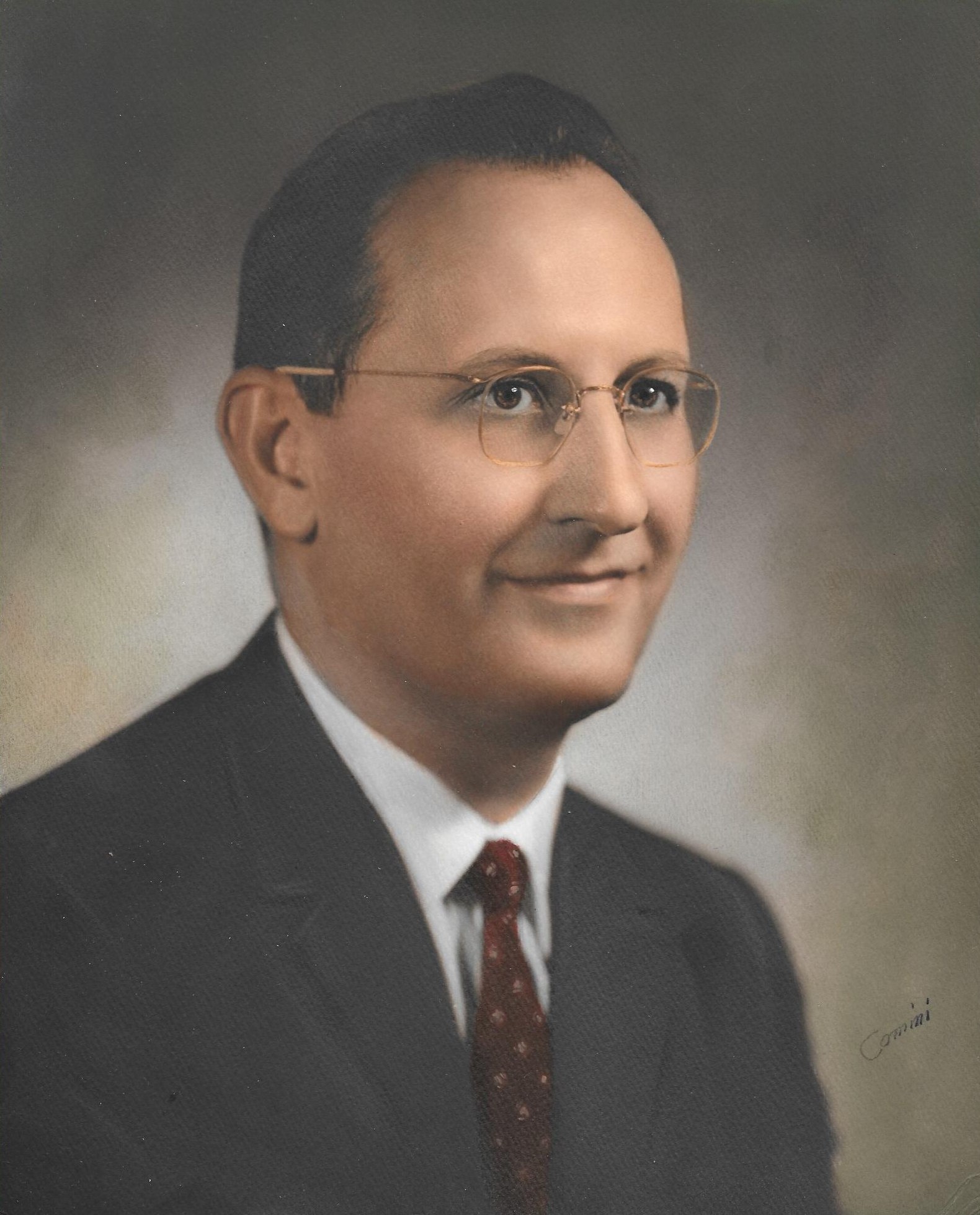
William Zebrun was born January 4, 1926 to Rose (Kehart) Zebrun and Joseph Zebrun. William grew up in the Benld, Illinois area with his two older siblings, George and Olga. The children grew up during the Great Depression, which did not spare the local coal mining industry and Benld's economy. The family home[1] was within easy walking distance from the town center, and was a short block away from Holy Dormition Orthodox Church, which William attended regularly, and where as an adolescent he was one of the choir directors. William graduated from the Benld Township High School with the class of 1943.
William registered for the draft on December 31, 1943, and was inducted into the US Navy a few months later, during WWII, on March 13, 1944 at 18 years old. He was sent to the Naval Training School (Radio specialty) at the University of Wisconsin for 19 weeks. He served at the US Naval Auxiliary Air Station (NAAS) Camp Kearny in San Diego and at the USNAS in El Centro CA, which was his last assignment in 1946. His honorable discharge from the Navy occurred on June 17, 1946, after a total of 2 years and 3 months of service. He was a Radioman Third Class (RM3c)[2].
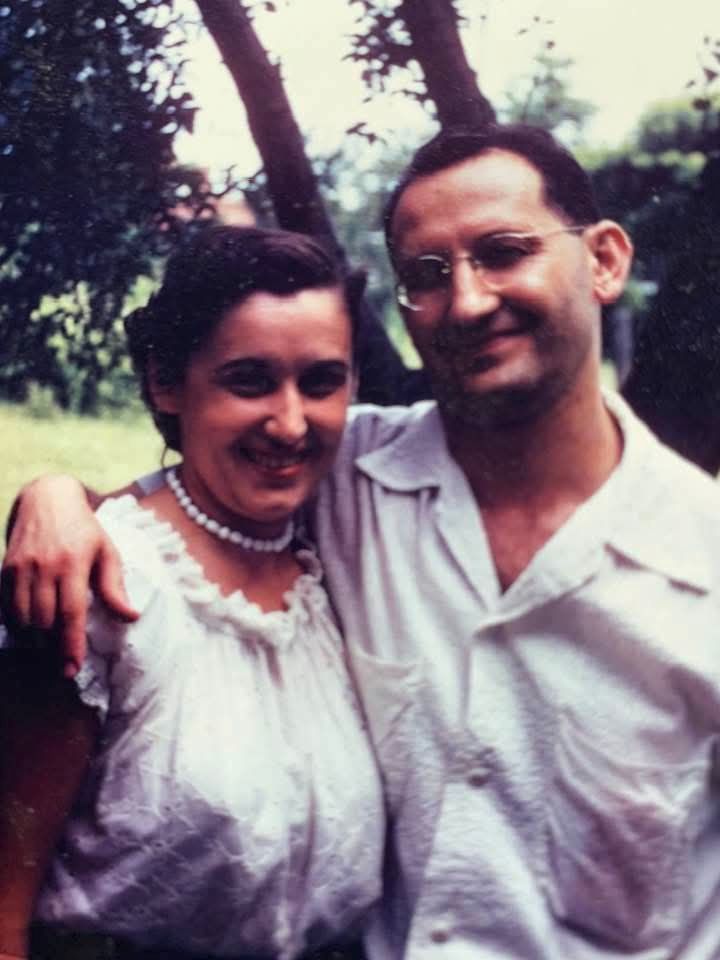
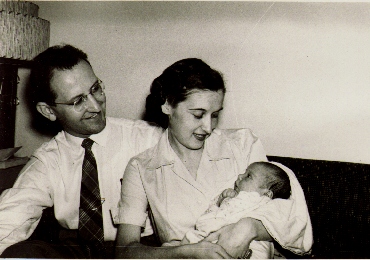
William then studied at Southern Illinois University, from which he graduated with a B.S. in Zoology and Chemistry in 1949. He married Olga Wasylenko (of Benld) on September 10, 1949 at the Holy Dormition Orthodox Church in Benld. In the following years, they had two sons and a daughter.
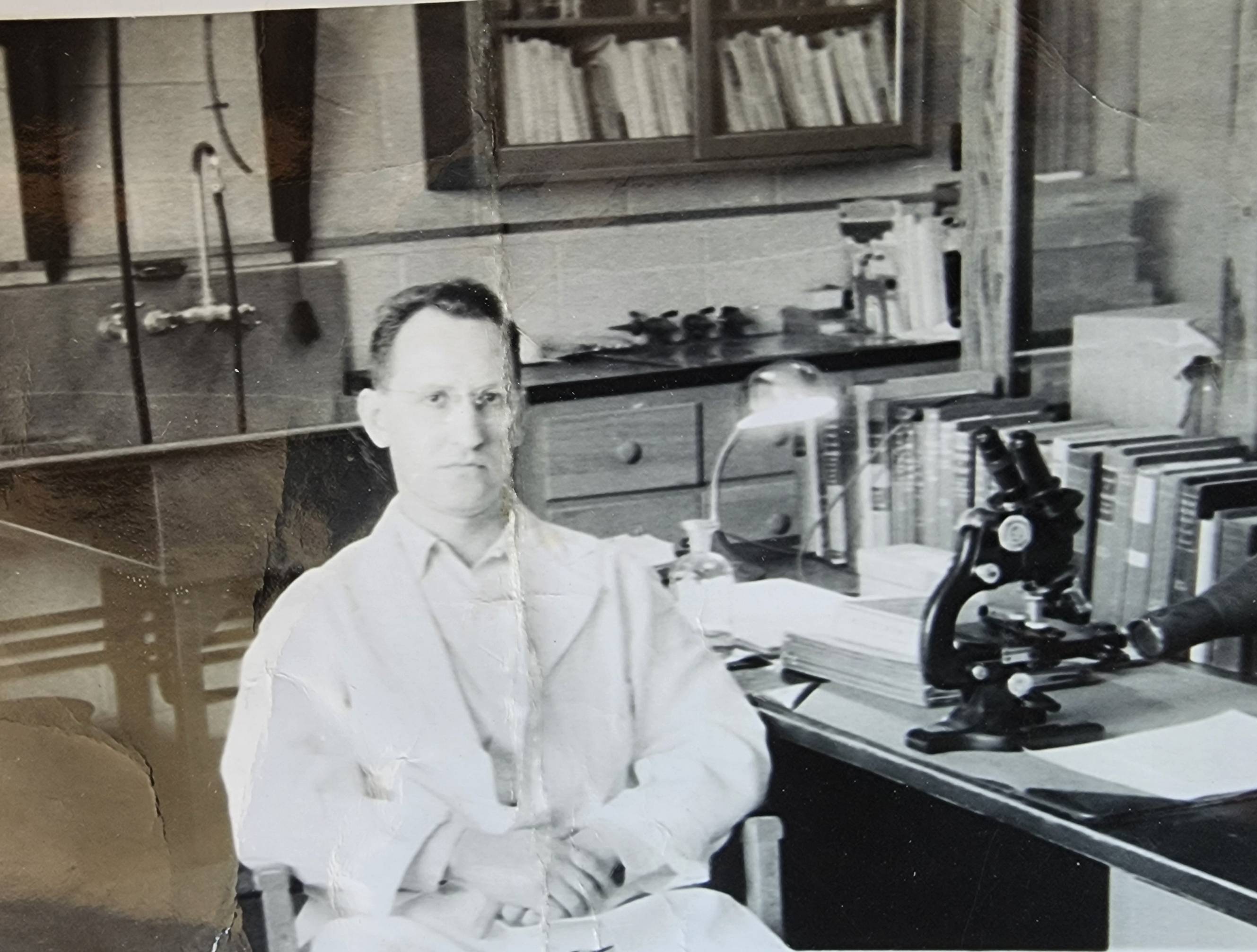
For a year and half, William, referred to as Bill by colleagues, was enrolled at the College of Medicine of the University of Illinois in Chicago, taking preclinical courses in anatomy and histology, and in 1950 was a member of the Alpha Kappa Kappa medical school fraternity. Bill Zebrun then transitioned to an academic research path at the University of Illinois, Urbana, where he obtained a M.S. in Zoology in 1952, and a Ph.D.[3] in Zoology-Cytology in 1957. His dissertation[4] dealt with electron microscopic imaging of the ultrastructure of cellular organelles. The dissertation committee included Prof F. B. Adamstone and John O. Corliss, Ph.D.[5].
In 1957 Bill Zebrun had a post-doctoral fellowship in cancer research through the US Public Health Service at the Washington University School of Medicine in St. Louis with Dr. E. V. Cowdry[6]. In 1957 to 1958 Bill Zebrun was a research associate in Cytochemistry in the Institute of Pathology at Case Western Reserve University in Cleveland with Dr. C. Leuchtenberger. This research led to several publications on the pathological effects of cigarette smoke on the lung tissue of mice.
In August 1958 William Zebrun moved with family to Dallas, TX to take a position as Instructor of Anatomy at Southwestern Medical School, now referred to as UT Southwestern Medical Center (UTSW). He was soon promoted to Assistant Professor in the Department of Anatomy at Southwestern Medical School, a position he held for five years through 1963[7], at which point he accepted a new position at SMU.
As part of the effort to establish a program in Cell Biology at Southern Methodist University (SMU), Professor Zebrun became an Associate Professor of Biology at SMU in 1964. He brought with him expertise in comparative anatomy, embryology, and electron microscopy. Venita Allison, Ph.D. trained at SMU with Professor Zebrun in electron microscopy techniques, and she later proceeded to serve the same biology department for decades as a tenured professor. Regarding William Zebrun's work at SMU, Professor Stallcup stated that colleagues and students "held Dr. Zebrun in high esteem as a teacher and research worker."[8]
Dr. Zebrun and Hilton H. Mollenhauer together were the first researchers to describe the cellular organelle "called the dictyosome-like structure (DLS), [which is] unique to early spermatocytes where they coexist with conventional Golgi apparatus."[11] Mollenhauer and Zebrun's 1960 article[12] was cited in a 2016 review article[13] as one of the earliest works of electron microscopic research that helped to settle the standing controversy in biology (since 1888) as to whether Sertoli cells were individual or a syncytium. Through the efforts of Dr. John O. Corliss, some of Dr. Zebrun's earliest EM research was published posthumously in 1967, as explained in footnote 2 of that article[14].
Professor Zebrun was a member of the American Association for the Advancement of Science, the Texas Academy of Science, the Society of Electron Microscopy, the Association of Anatomists, and the Sigma Xi scientific research honor society (SigmaXi.org). Dr. Zebrun was also an active member of St. Seraphim Orthodox Church in Dallas, now St. Seraphim Cathedral, where he was choir director[10] in the early 1960s, and served on the parish council[9].
William Zebrun passed away Saturday, July 17, 1965 in St. Paul Hospital in Dallas, TX. At his funeral, Fr. Dmitri Royster delivered the following as part of his sermon:
We are laying to rest a man who devoted himself to the science of life--biology. He was, as he told me a number of times, fascinated by the order of things in life, but deeply concerned about the disorders and distortions. In fact, he had been engaged in research for several years, adding his contribution to the findings of many doctors and scientists in the study of the causes of cancer. He understood much about life's processes; he faced constantly those abnormal things that bring about pain, sickness, suffering, and death.
Like any intellectual or serious student he had sought the way to reconcile his faith with his scientific knowledge. He found it and held fast to Christ's way. What the Church had taught him from childhood and what he learned by observation, study and experiment were found to be compatible and harmonious.[15]
Burial was in the Holy Dormition section of the Benld Cemetery.
Gallery

Footnotes
- Also living close by were two aunts: his paternal aunt, Evdokia Gricevich, and his maternal aunt, Mary Kehart Homyk. In his youth, some of his friends in Benld included Mike Wasylenko, Mike Makuh, Ivan Groziak, and Sylvan Kapusta. ↑
- Military service dates and assignments obtained from copies of his official separation and discharge papers, a muster roll, and his draft registration card. RM3c signified a Third Class Petty Officer rank. ↑
- During his doctoral training, in the summer of 1953, Bill Zebrun traveled south with Olga to study Marine Biology at the Gulf Coast Research Laboratory in Ocean Springs (GCRL), Mississippi (close to Biloxi). Also in May 1953 he was initiated into the Phi Sigma biological honors society ("Hansen Receives Award for Disease Research," The Daily Illini, May 28, 1953, page 1.) ↑
- Zebrun, William. An Electron Microscopic Investigation of Nuclear and Cytoplasmic Structures in Tetrahymena Rostrata. Dissertation. University of Illinois at Urbana-Champaign. 1957. As unicellular eukaryotes, species in the genus Tetrahymena have historically been used as model research organisms in biology. As ciliated protozoa, Tetrahymena are in some ways "animal-like," but are not part of the animal kingdom. ↑
- See this review of Dr. John O. Corliss' career, in which Bill Zebrun is mentioned as one of his advisees. ↑
- Professor Cowdry's biography is available. ↑
- During his tenure at Southwestern, Professor Zebrun (through grants) was able ""to equip a cytochemical lab as well as a biochemical laboratory for extraction and fractionation of tumor DNA and histones." (Wm Zebrun personal correspondence 1963). Professor Zebrun also served as an advisor for William Hendee, Ph.D., who in the preface of the first edition of his classic book, Medical Imaging Physics, recognizes William Zebrun, Ph.D. among his former teachers. Bill Zebrun is also mentioned in Hendee's interview on Astro.org, in his answer to the third question. ↑
- The SMU Campus, Thursday, July 22, 1965. ↑
- "Church to Install New Parish Officers," Dallas Morning News (Dallas, TX), November 26, 1960, pg 8. The other officers listed in 1960 were Peter Chichilla, John Czuwala, Abe T. Salih, Demetra Royster, and Eva Berbary. ↑
- "Dr. Wm. Zebrun Dies in Texas; Rites Yesterday," Benld Enterprise (Benld, IL), July 22, 1965. ↑
- James Morré, D. In honor of Hilton H. Mollenhauer. Protoplasma 172, 1 (1993). https://doi.org/10.1007/BF01403715. Link to article. Professor James D. Morré of Purdue University has stated that "[t]he presence of the bridging elements makes the DLS clearly different from Golgi apparatus and places it as a candidate as a new organelle unique to certain stages of spermatogenesis." Dictysome Like Structure in Reproductive Development, NIH grant abstract posted here. ↑
- Mollenhauer HH, Zebrun W. Permanganate fixation of the Golgi complex and other cytoplasmic structures of mammalian tests. J Biophys Biochem Cytol. 1960 Dec;8(3):761-75. doi: 10.1083/jcb.8.3.761. PMID: 13771855; PMCID: PMC2224960. Available through PubMed here. ↑
- França LR, et al. The Sertoli cell: one hundred fifty years of beauty and plasticity. Andrology. 2016 Mar;4(2):189-212. doi: 10.1111/andr.12165. Epub 2016 Feb 4. PMID: 26846984; PMCID: PMC5461925. The PDF references Dr. Zebrun's work on the fourth page of the PDF. Available through PubMed: https://pubmed.ncbi.nlm.nih.gov/26846984/ . ↑
- William Zebrun, John O. Corliss and Jiří Lom. Electron Microscopical Observations on the Mucocysts of the Ciliate Tetrahymena rostrata. Transactions of the American Microscopical Society, Vol. 86, No. 1 (Jan., 1967), pp. 28-36. https://www.jstor.org/stable/3224421. Footnote 2 of this article also notes that Mrs. Olga Zebrun gave permission to publish Dr. Zebrun's electron micrographs (Figures 1-3, 6, 7) for this article. ↑
- Funeral sermon preached on the occasion of the burial of William Zebrun. July 1965. Currently saved in the Archives of Archbishop Dmitri Royster. ↑